Your DAO Won't Cover Your Asthma Inhaler: The Benefits Gap Nobody in Web3 Wants to Talk About

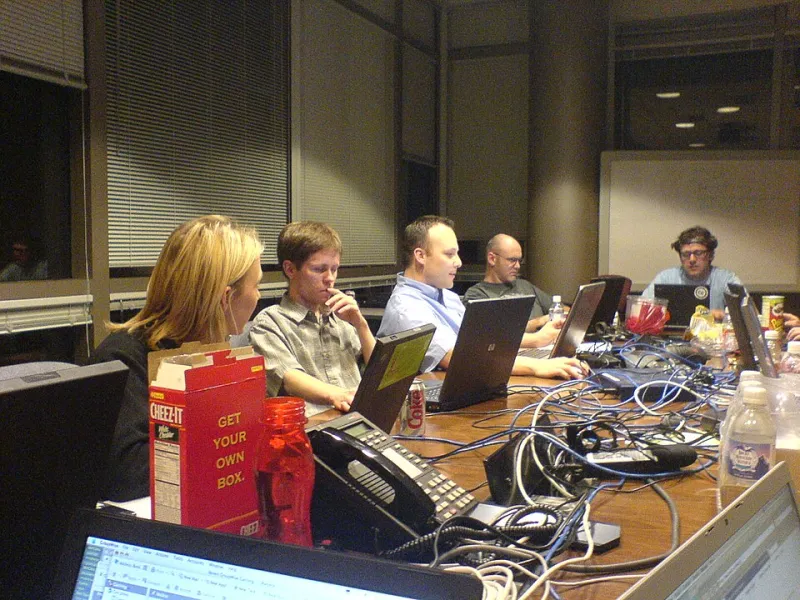
Photo: IthakaDarinPappas, CC BY 4.0, via Wikimedia Commons
Here's a fun thought experiment for your next token-gated Twitter Space: ask every US-based contributor on the call how they get health insurance. Then wait. The silence is telling.
For most of the American workforce, the answer is boring and institutional — an employer-sponsored plan, payroll deductions, maybe a dental rider they forgot they had. But if you earn your living contributing to a DAO, there's no HR department, no open enrollment email, no benefits portal. There's a Discord server, a multisig, and a stream of USDC that stops the moment your proposal doesn't pass.
The Problem With 'We're Not Really an Employer'
The core issue is structural, not ideological. Most DAOs go to great lengths to avoid being classified as employers — contributor agreements instead of offer letters, bounties instead of salaries, tokens instead of W-2 wages. That ambiguity is partly a legal shield and partly just how these organizations grew up.
The side effect is that nobody's on the hook for benefits. A traditional company negotiating with an insurer needs a defined employee count, payroll records, and a legal entity that can sign a contract. DAOs often have none of the above, or they have a foundation in the Caymans that has zero interest in touching the American healthcare system.
So the contributor — often a full-time worker in every practical sense — falls into the same bucket as a freelancer. Except freelancers at least chose that trade with open eyes. Plenty of DAO contributors left stable jobs for what they thought was the future of work, and only realized later that the future of work came with a $900/month marketplace premium.
What People Are Actually Doing
The stopgaps are creative, if uneven:
The ACA route. For many US contributors, the Healthcare.gov marketplace is the real employer-sponsored plan — except they're the sponsor. Income from DAO grants can make subsidies tricky, especially when token compensation complicates the picture of what you actually 'earned' in a given year. Some contributors time their income to stay in subsidy-friendly bands, which is exactly as stressful as it sounds.
Crypto-native benefits protocols. A handful of startups have emerged promising 'benefits for DAO contributors' — essentially acting as an intermediary layer that aggregates contributors across many DAOs into something resembling a group plan. The pitch is compelling: your ten different DAO gigs pool together into one insurance relationship. The execution is harder, because underwriting group health coverage for a scattered, pseudonymous workforce is not a solved problem.
Freelancer unions and guilds. Organizations like the Freelancers Union have offered insurance access to independent workers for years, and some crypto natives have plugged into that infrastructure. There's a certain irony here — labor organizing tools from a previous era filling the gaps left by the supposedly post-labor movement.
The 'keep a real job' hack. Plenty of contributors quietly maintain part-time or contract roles at traditional companies purely for the health plan, treating their DAO work as the side gig even when it's the primary income. Ask around any major DAO and you'll find people doing exactly this.
Why This Is a Hiring Problem, Not Just a Benefits Problem
It's tempting to file this under 'growing pains.' But the benefits gap is quietly shaping who joins web3 organizations and who doesn't. If you're 24, single, and healthy, contributing to a DAO is a viable lifestyle. If you're 38 with a spouse, a kid, and a thyroid condition, the math changes dramatically — and the talent pool shrinks accordingly.
DAOs competing for senior operators, designers, and engineers are discovering that 'we pay in stablecoins' doesn't beat 'we pay 80% of your family's premium.' Until that changes, the most experienced candidates will keep treating DAO work as a moonlighting experiment rather than a career move.
What a Real Solution Would Look Like
It probably isn't each DAO buying its own group plan — most are too small, too international, and too legally skittish. More plausible is a shared infrastructure layer: a protocol or cooperative that any DAO can plug contributors into, with premiums funded by a mix of contributor payments and per-contributor treasury contributions baked into funding proposals.
Imagine a world where every funding proposal that includes contributor compensation automatically routes a small percentage into a benefits pool. That's the kind of thing smart contracts are genuinely good at — mandatory, transparent, on-chain contributions that no individual DAO has to negotiate from scratch.
The alternative is that web3 work stays a privilege of the young, the healthy, and the partnered. That's not a talent strategy; it's a demographic filter.
The DAOs that figure out benefits first will have a recruiting edge that no token grant can match. Everyone else is just hoping their best contributors stay young and uninsured.